Casa Speranza
The design of this house, like others by NFA addresses the unique perspectives and goals of our client. This is typical. What is also typical is identifying what makes the clients unique, which can often times lead to results that are unexpected. What truly sets this project apart is the lengths to which the clients were willing to go to make their home *affordable while maintaining durability and function.
For most residential projects the strategy for “affordability” is to use the least expensive methods and materials from top to bottom, including foundation, structural systems, insulation, exterior finishes, interior finishes. Typical “affordable” projects are built directly on piles (in New Orleans) or on turn-down slabs (where soils aren’t swamp-like), and the structural system is usually wood-framed (“stick built”), designed only to meet minimum wind requirements, with minimal insulation. Over time, these buildings age faster, and the cost to maintain them can exceed that of a better-constructed home.
This project asks a different question: why not virtually eliminate finishes and avoid compromising on the foundation, structural system, or durability? Three main strategies make this possible:
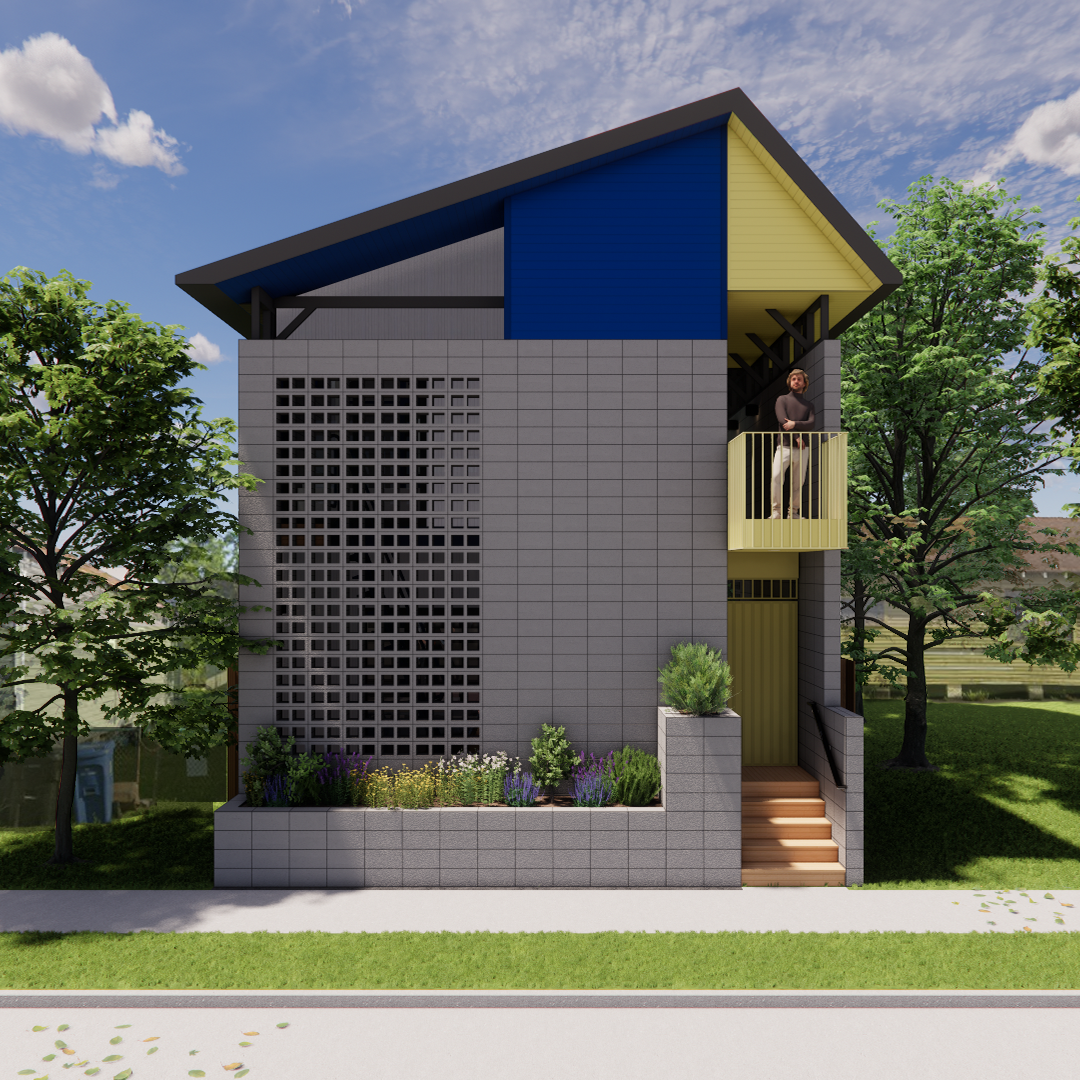
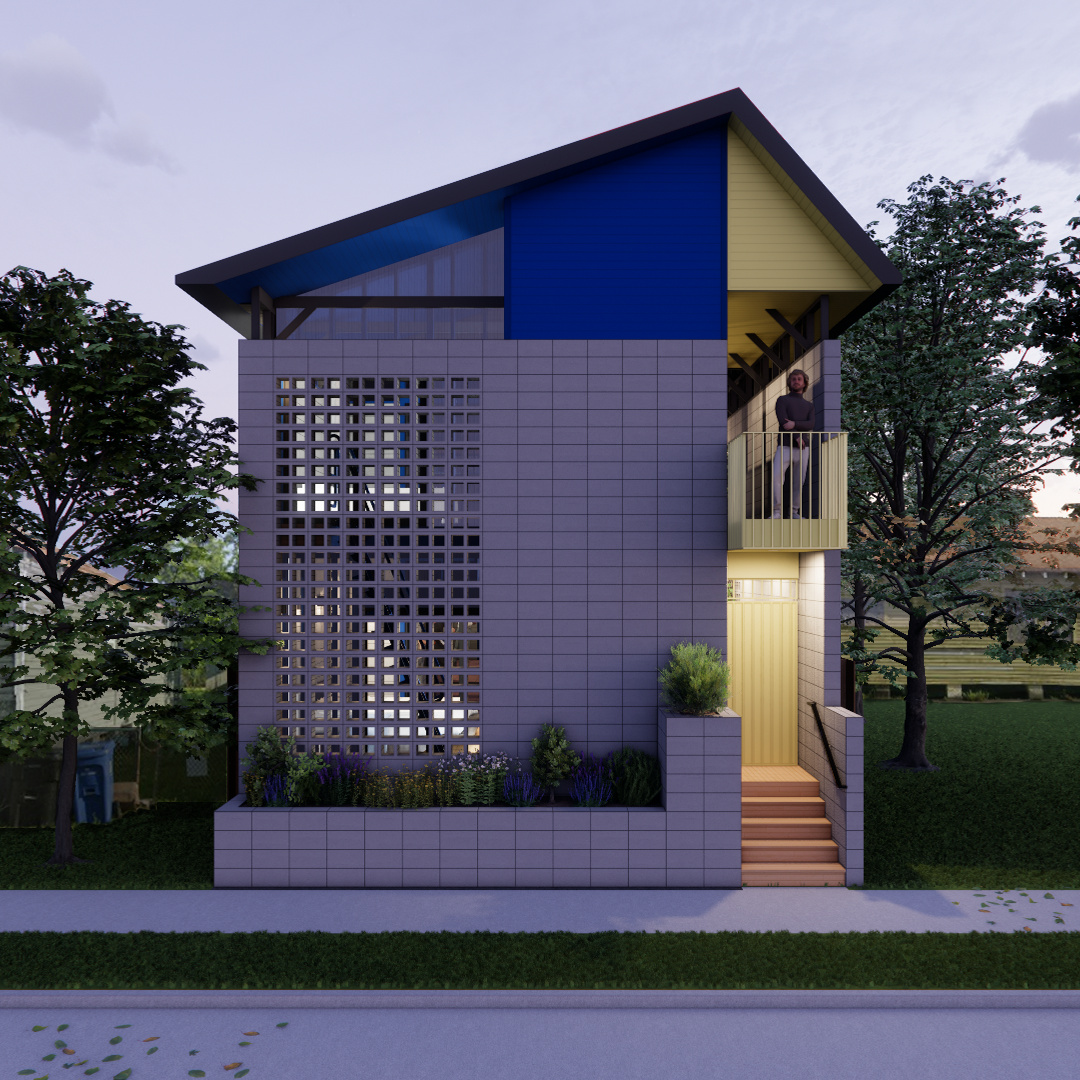
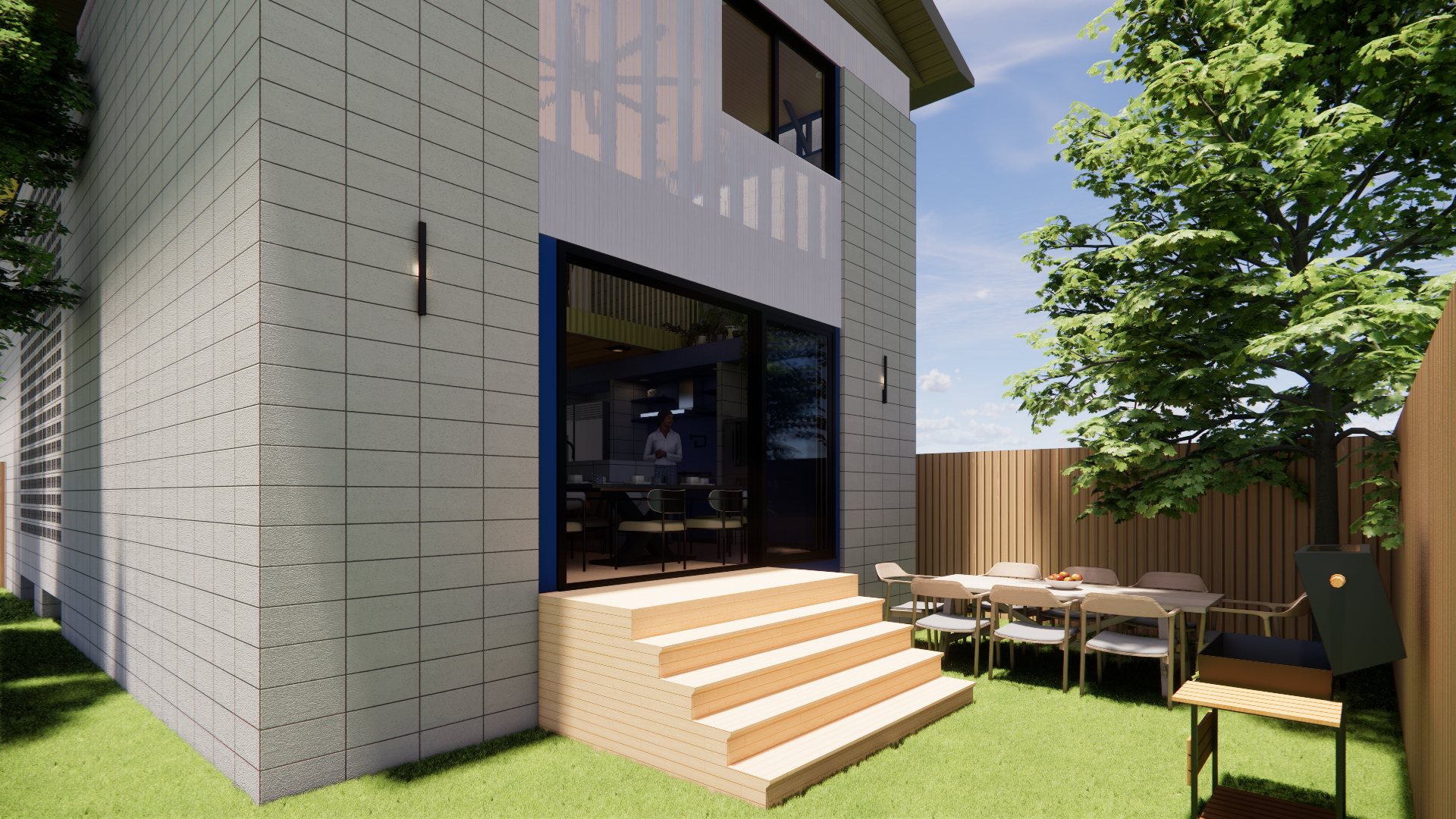
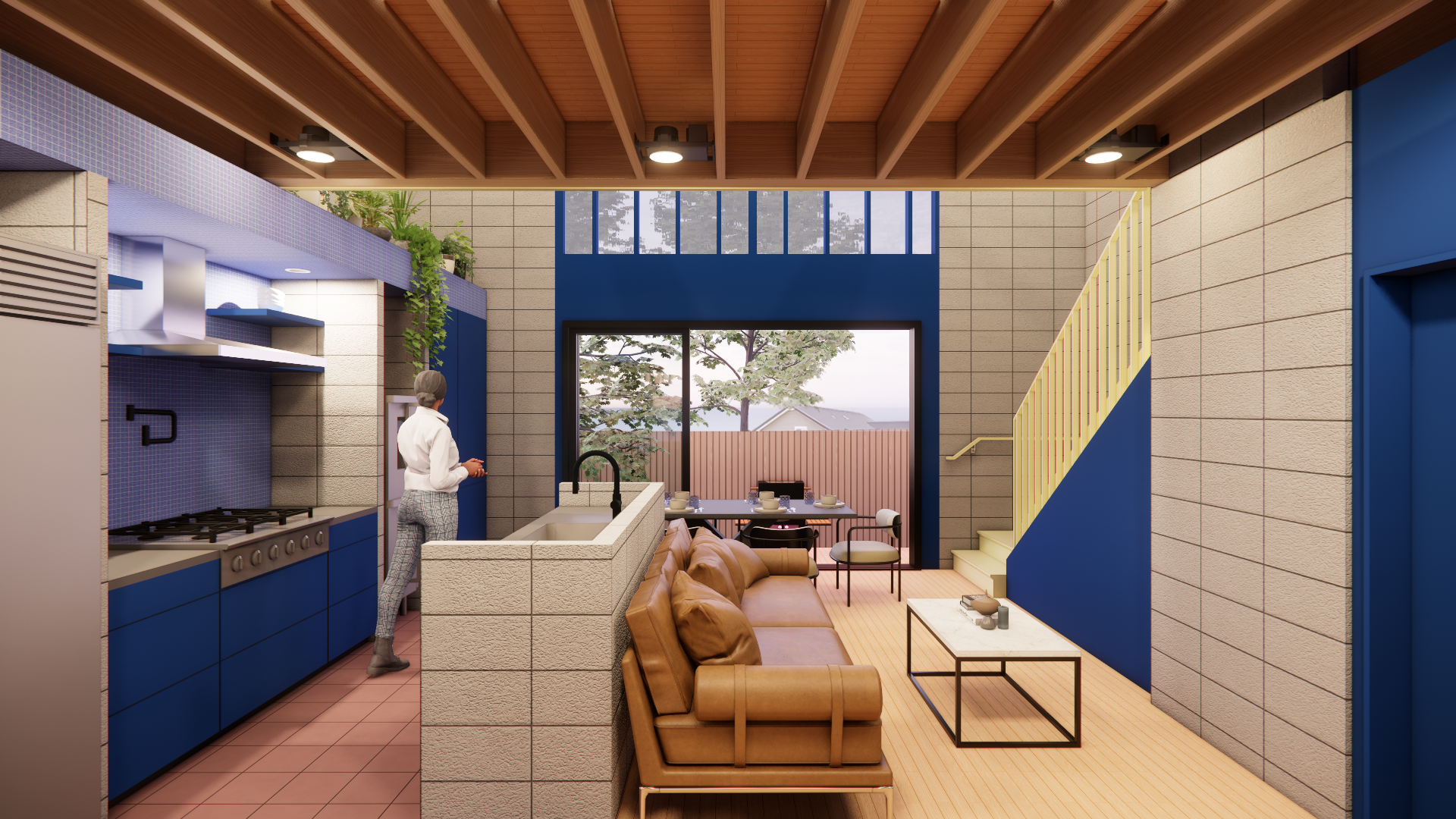
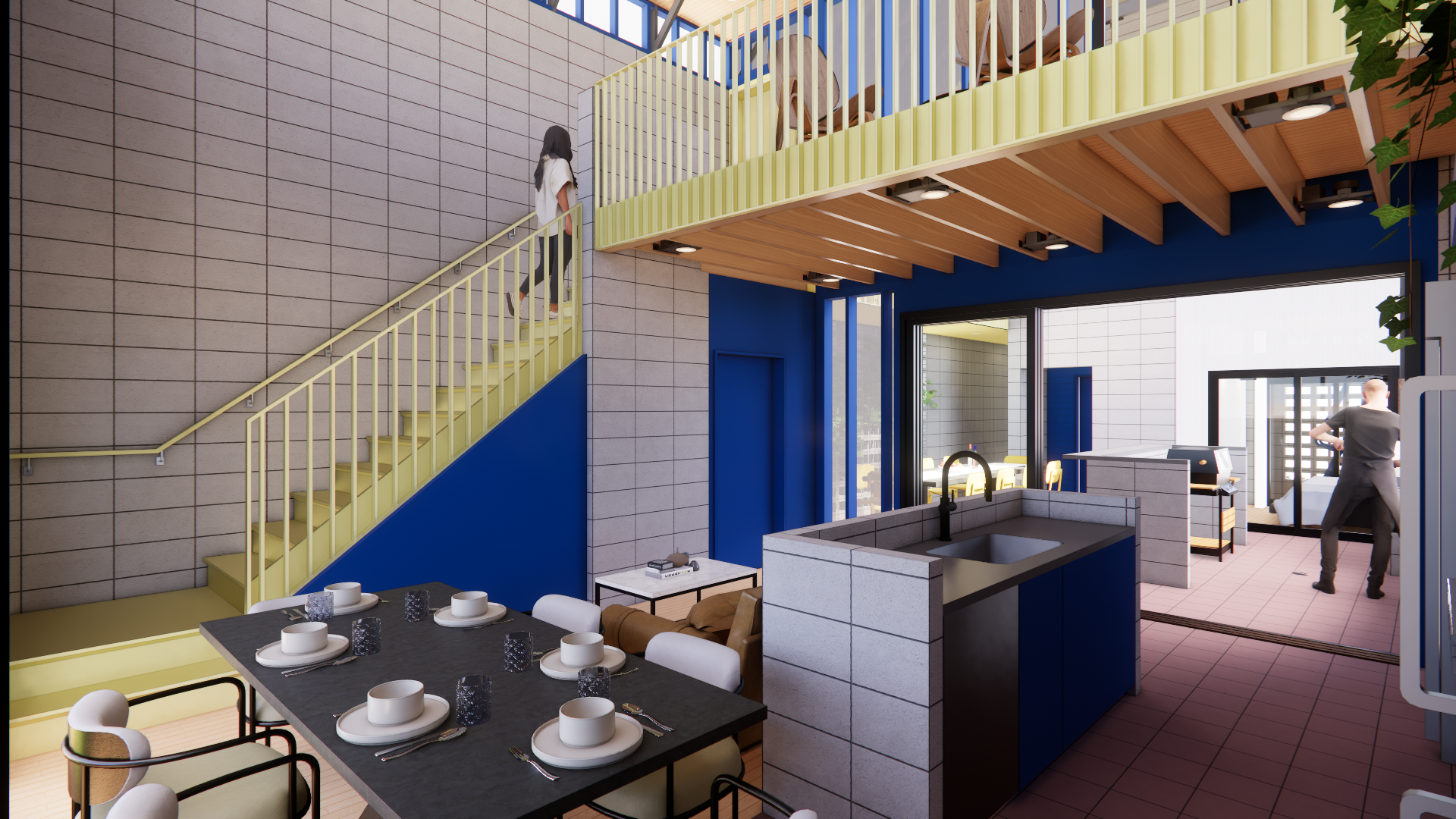
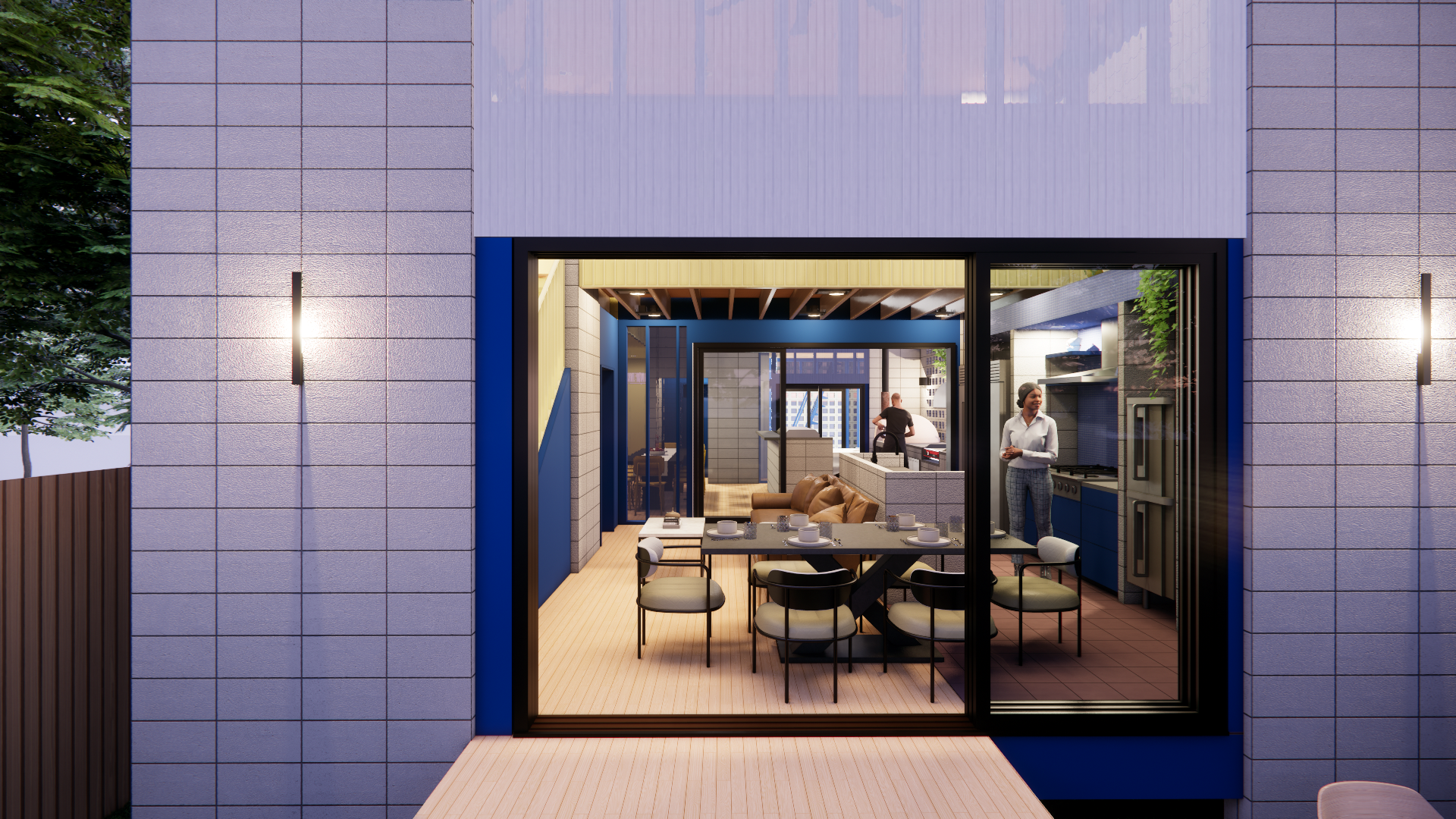
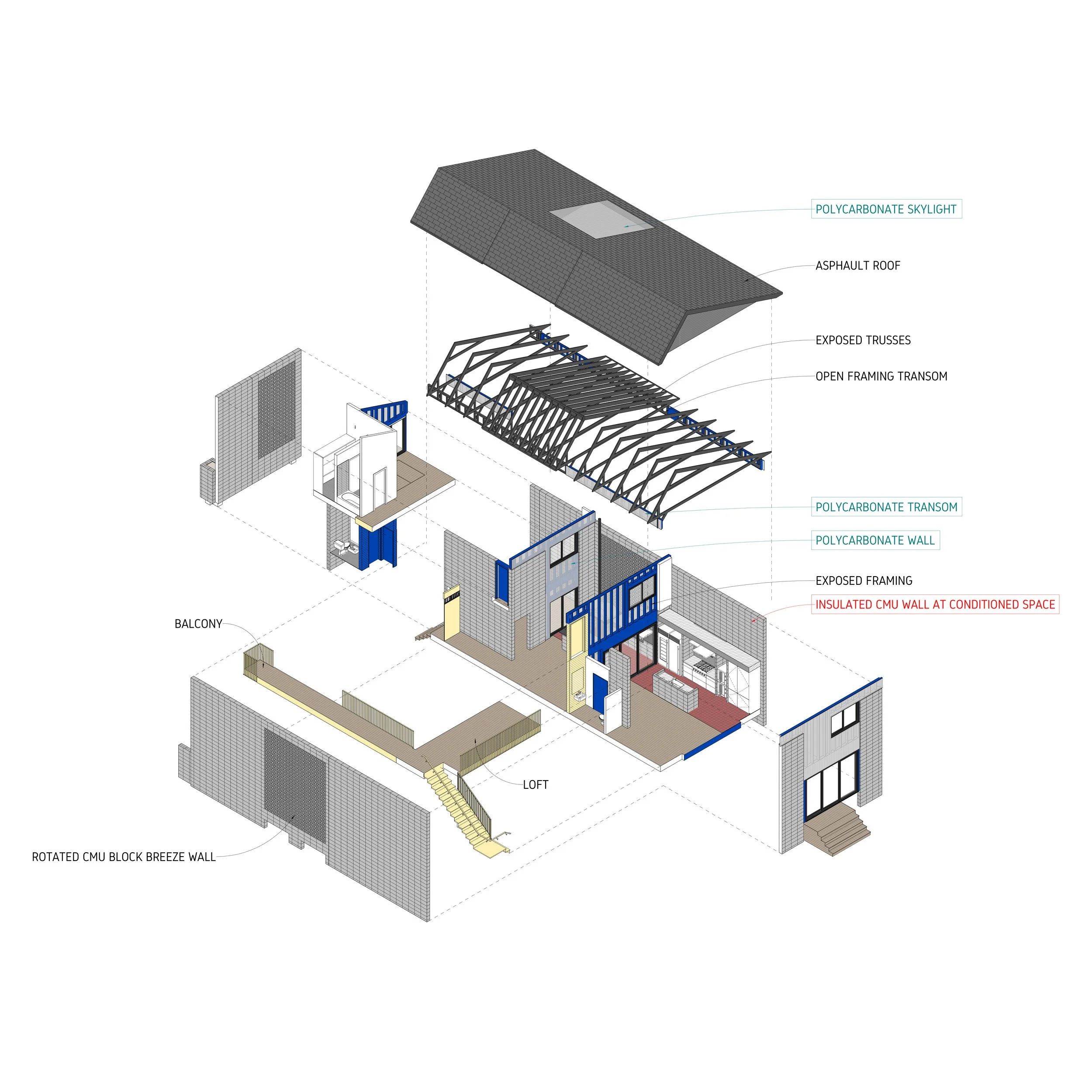
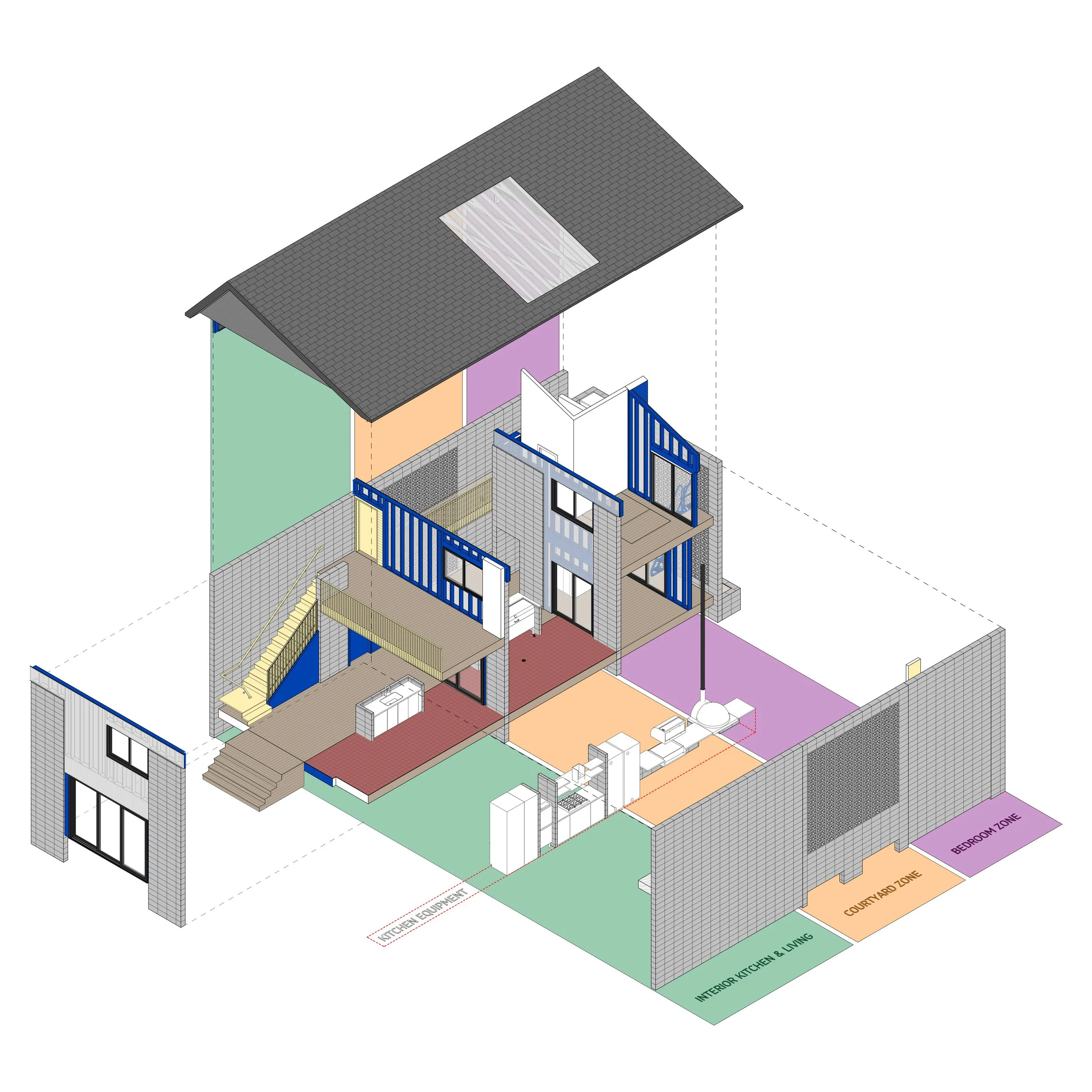
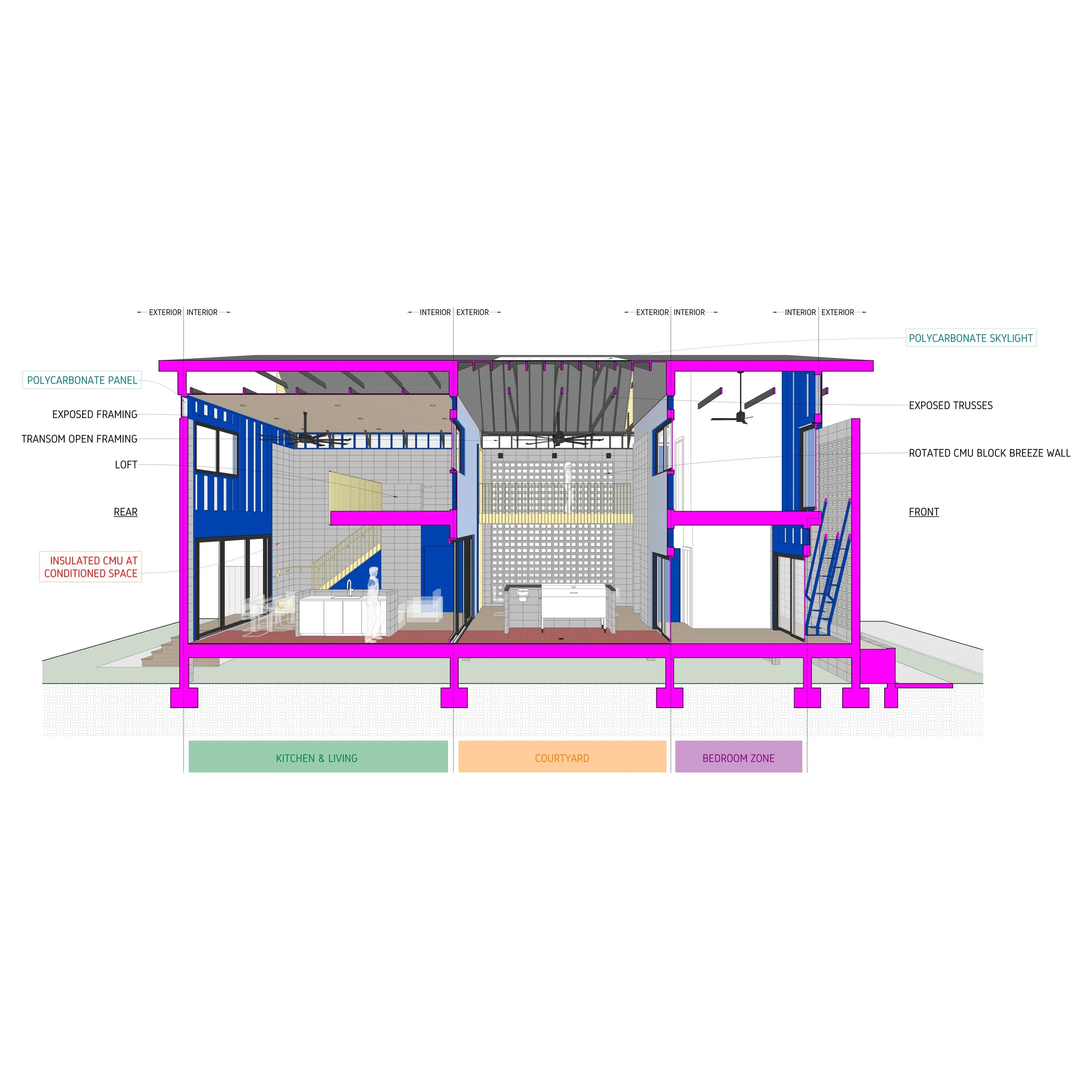
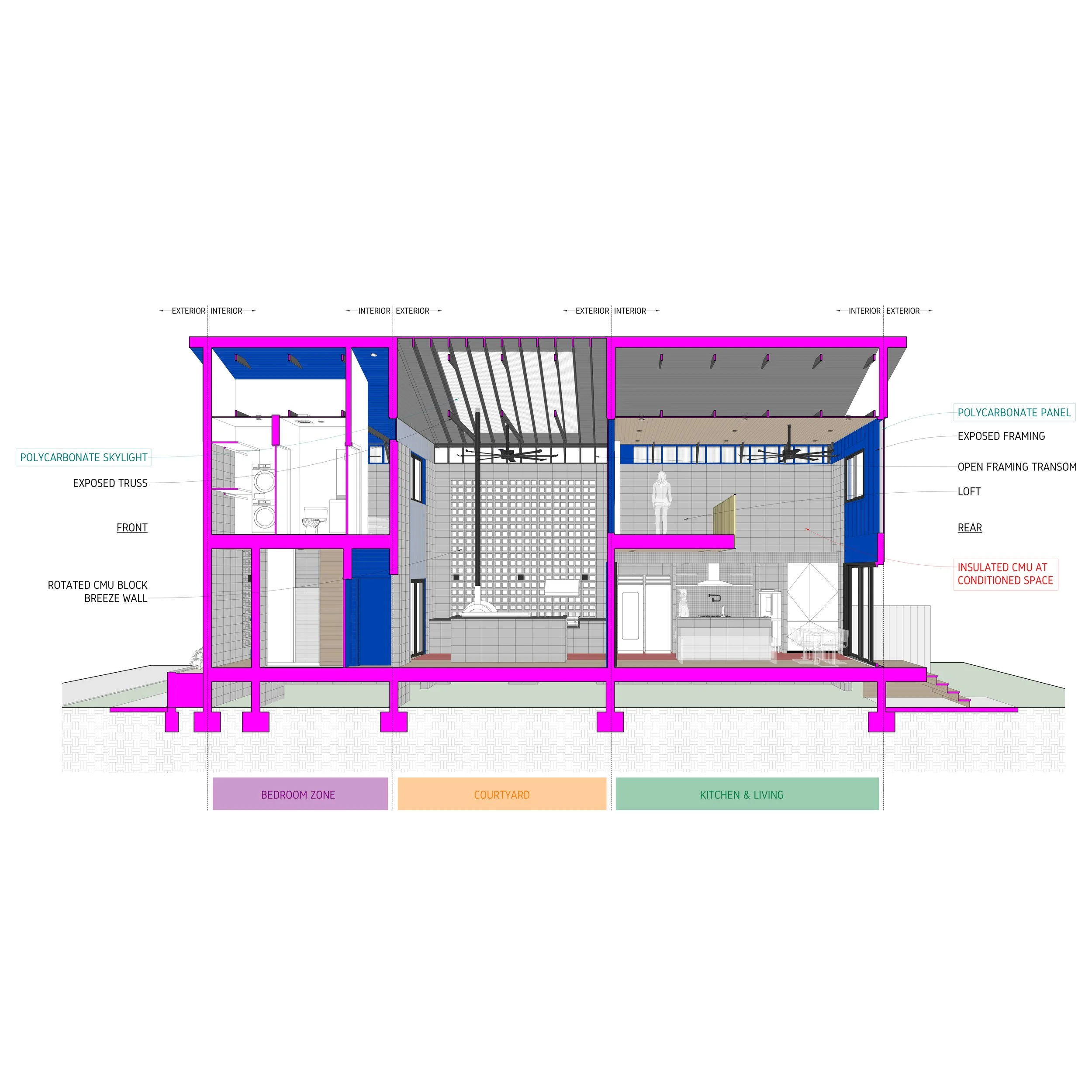
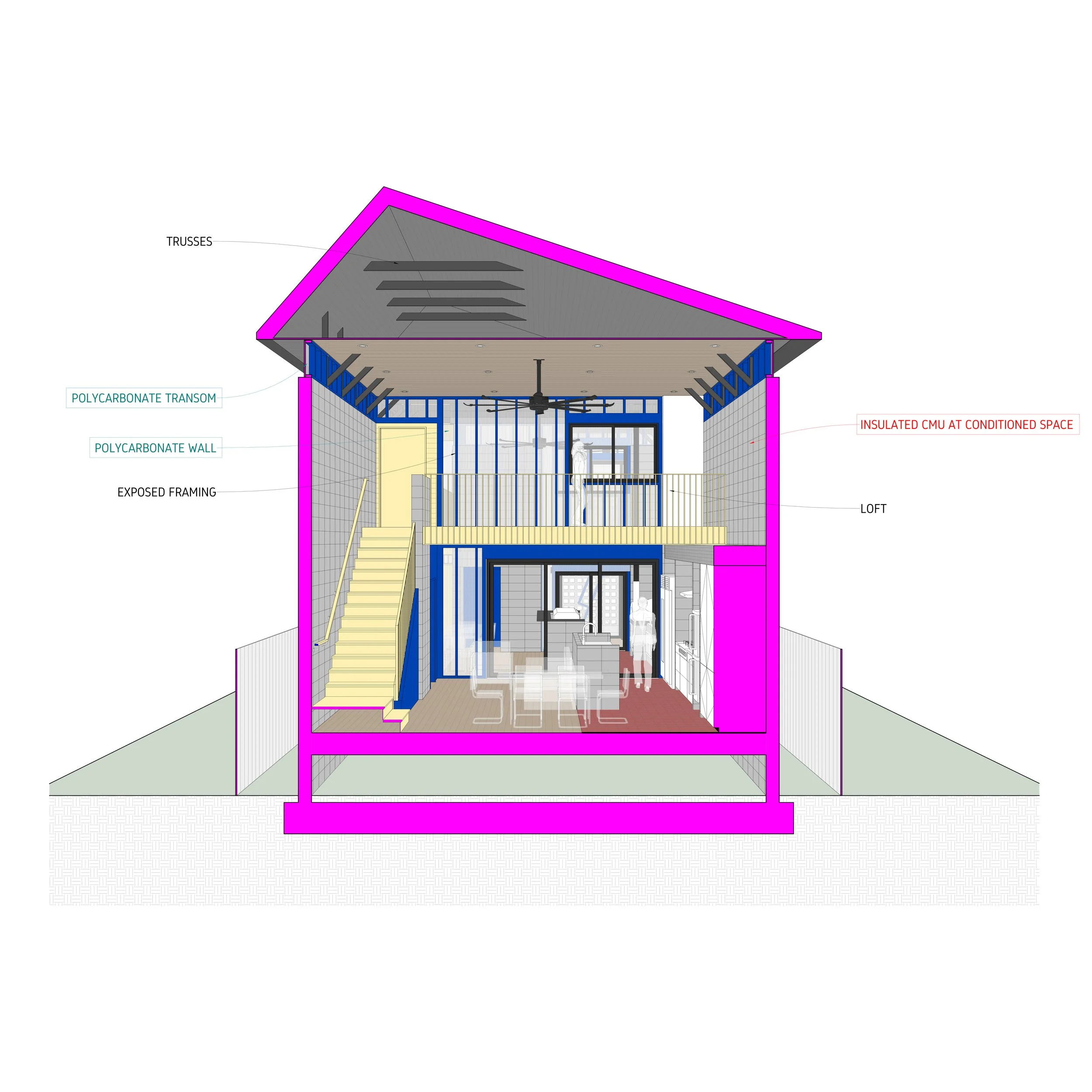
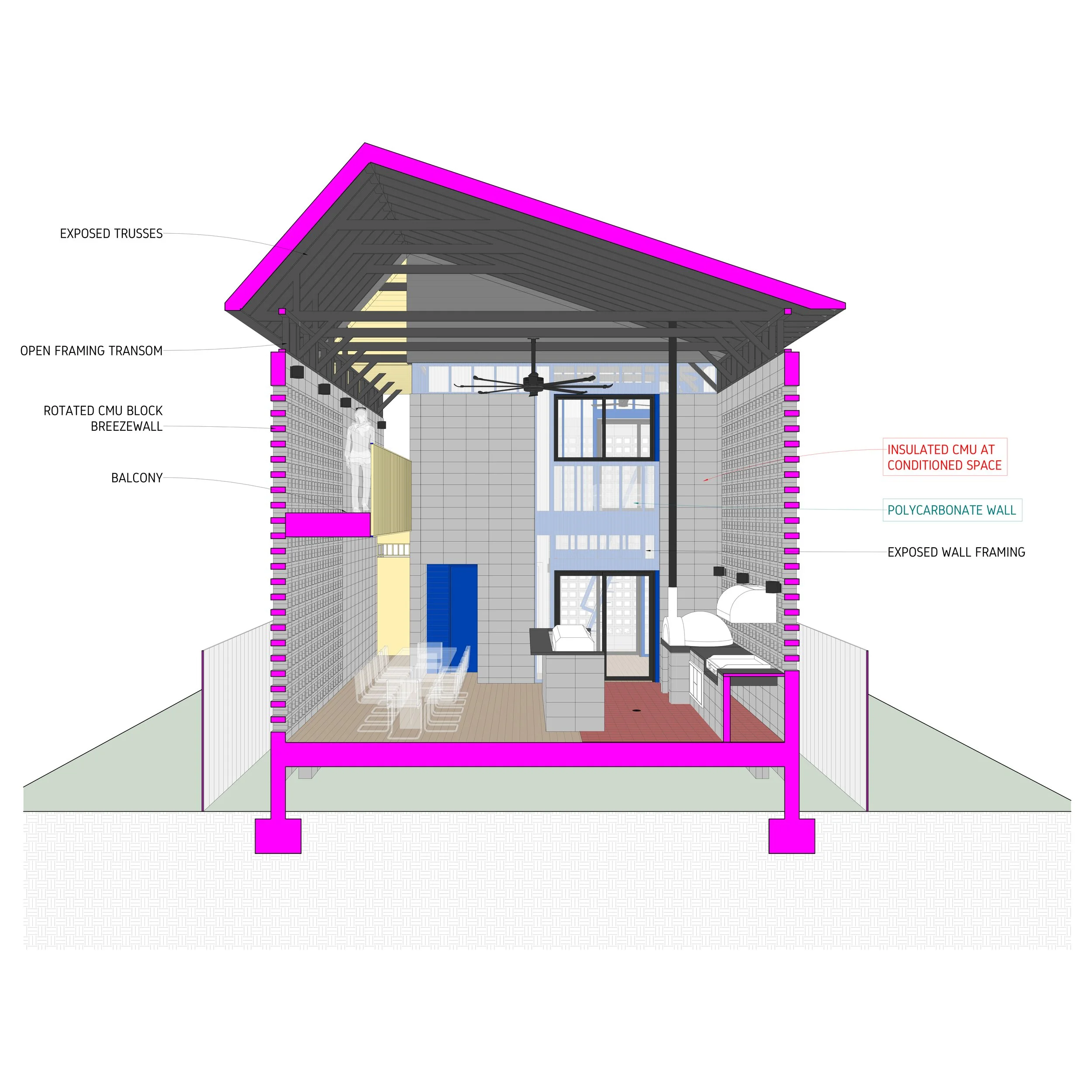
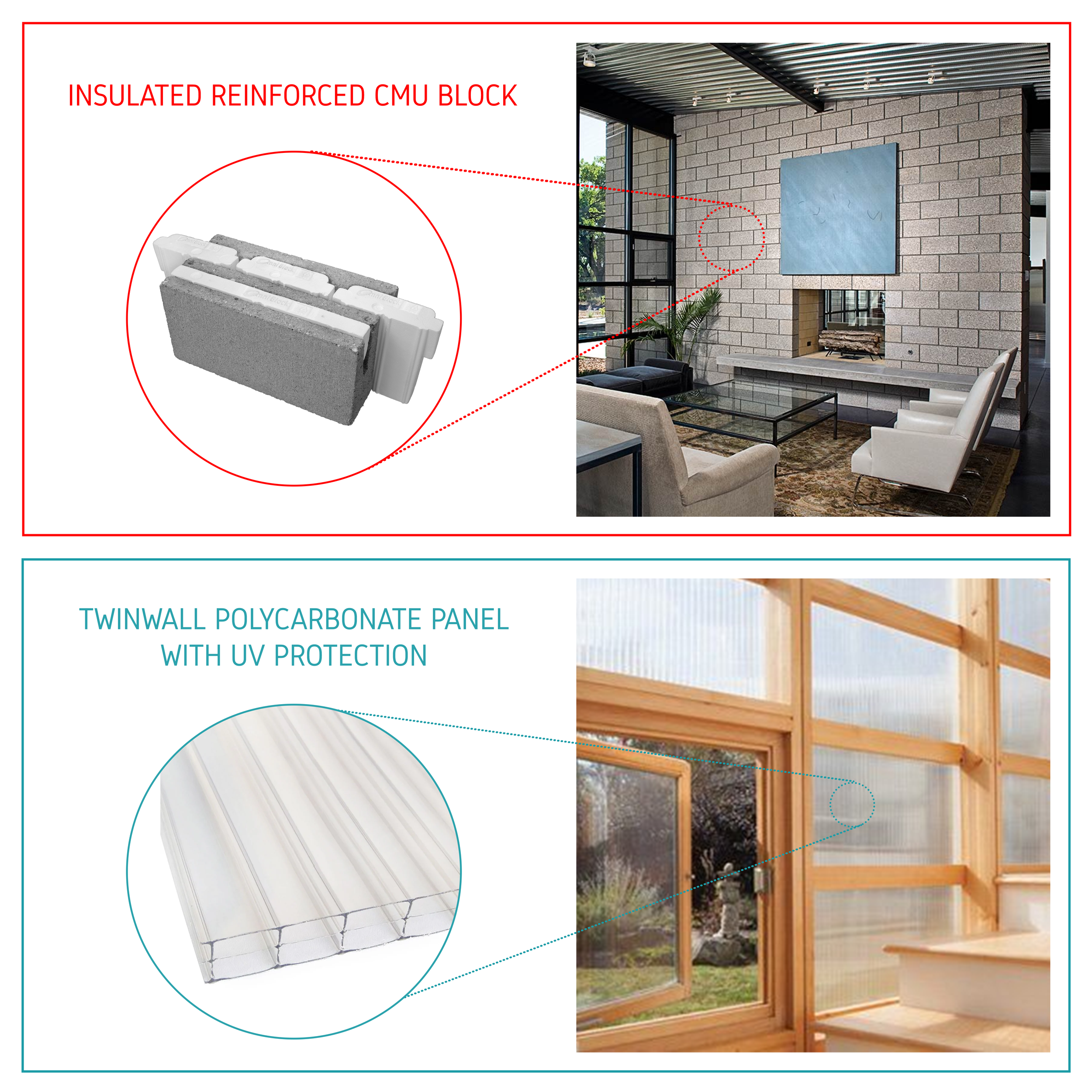
1) CMU: The design uses a coated, pre-insulated, CMU (Concrete Masonry Unit commonly referred to as “Cinder Block”) that functions as the exterior barrier system (keeping rain out), structural wall, (a better) insulated wall, (has an added benefit of) internal thermal mass (via concrete to help mitigate temperature fluctuations), and the finish for the finish (many of) the interior walls. These walls have minimal cut opening to save on irregular and cut blocks.
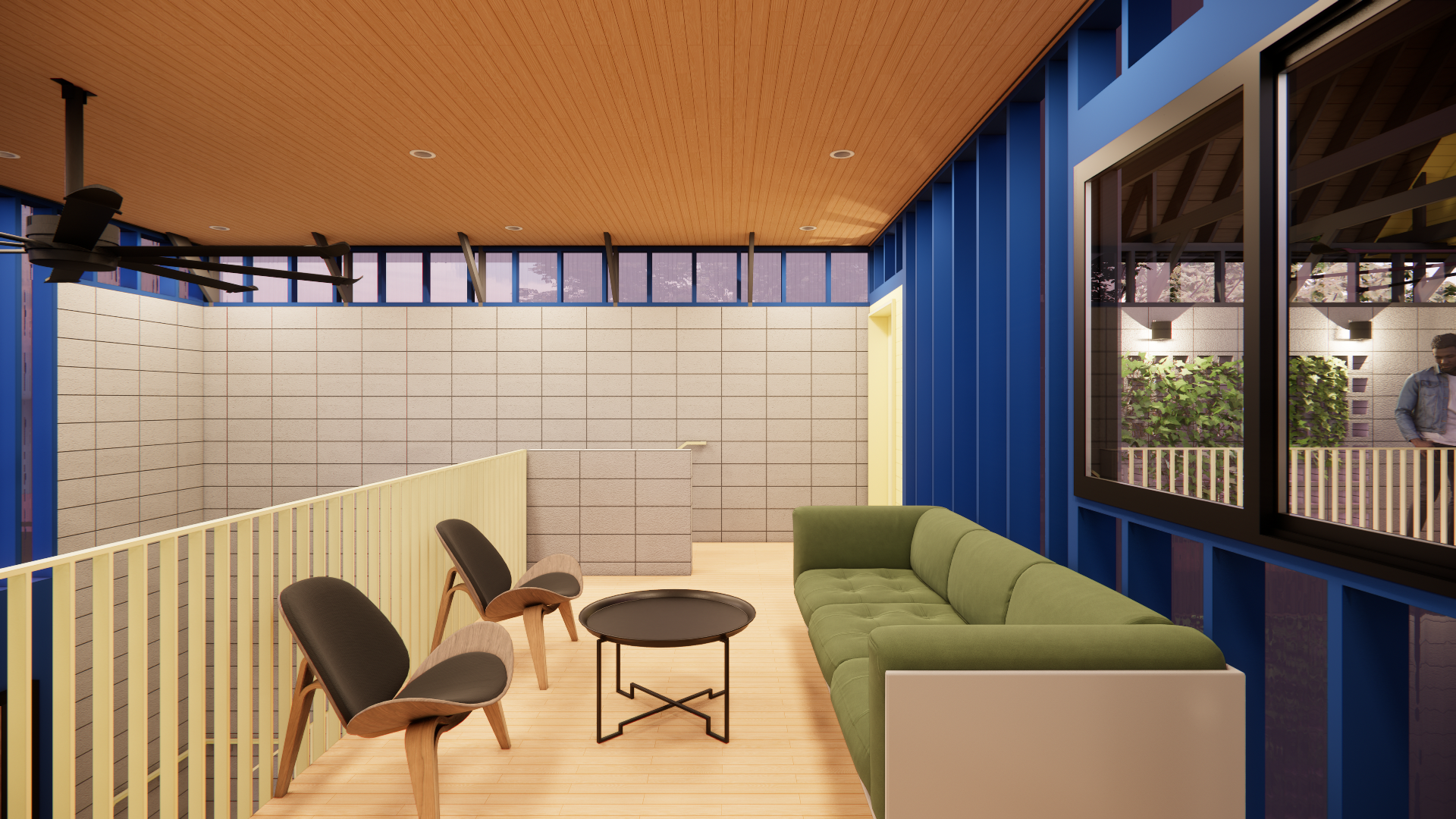
2) Polycard/Exposed Framing: The rest of the infill wall uses exposed wood framing (studs) that are painted and polycarbonate panels are fastened to the exterior as the barrier. The polycarbonate panels allow for the transmittance of light but provide much better U-value (insulation) than typical glass which allowed the design to minimize the number of windows used in the project. There are only 8 windows and sliding doors in total.
3) “Finished” floors: are built as houses were (in New Orleans) 100 years ago, with “tongue and groove” wood planks directly fastened to framing rather than plywood sub-floor with resilient flooring on top. Not only is this a more authentic way to build, but it also virtually eliminates plywood from the project other than the roof.
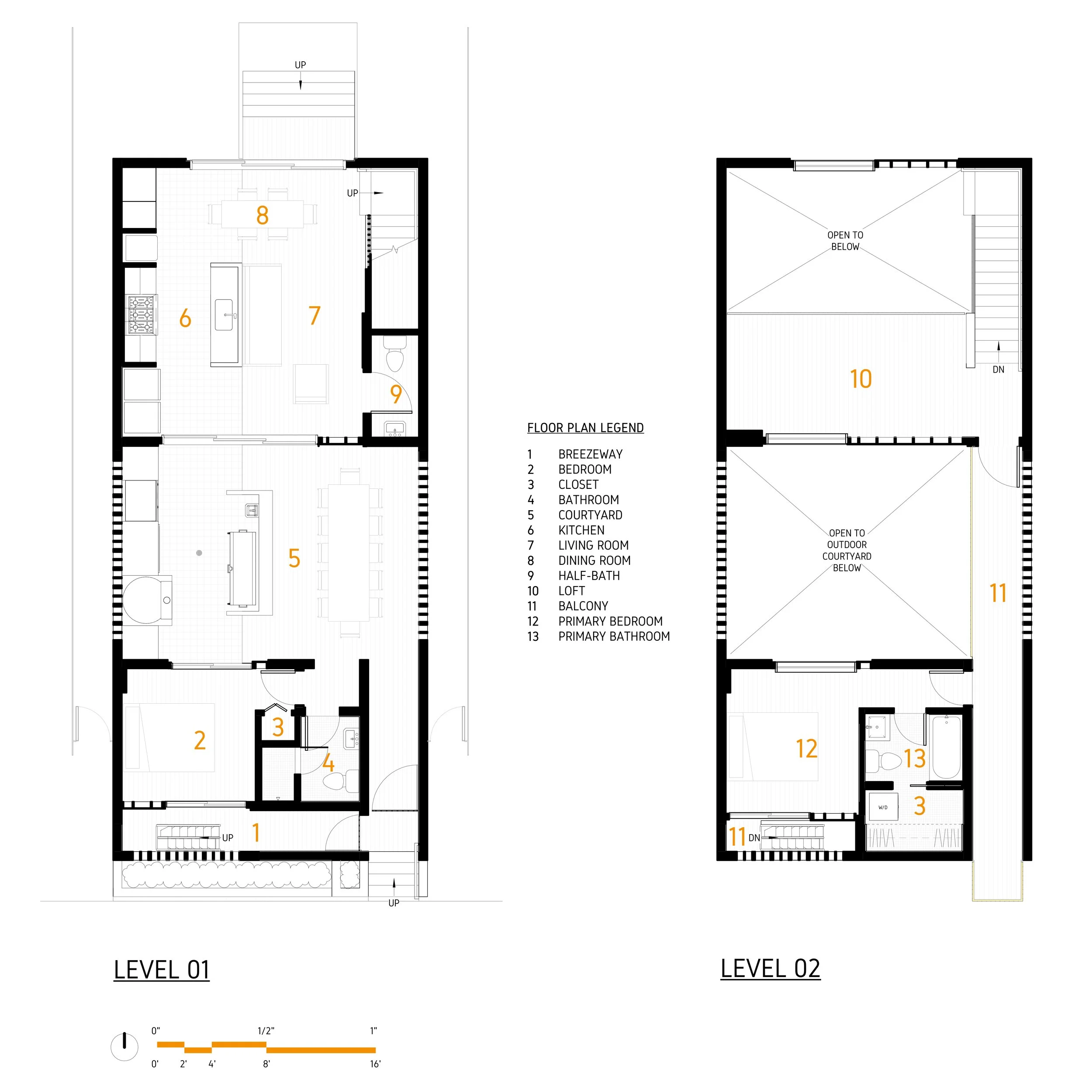
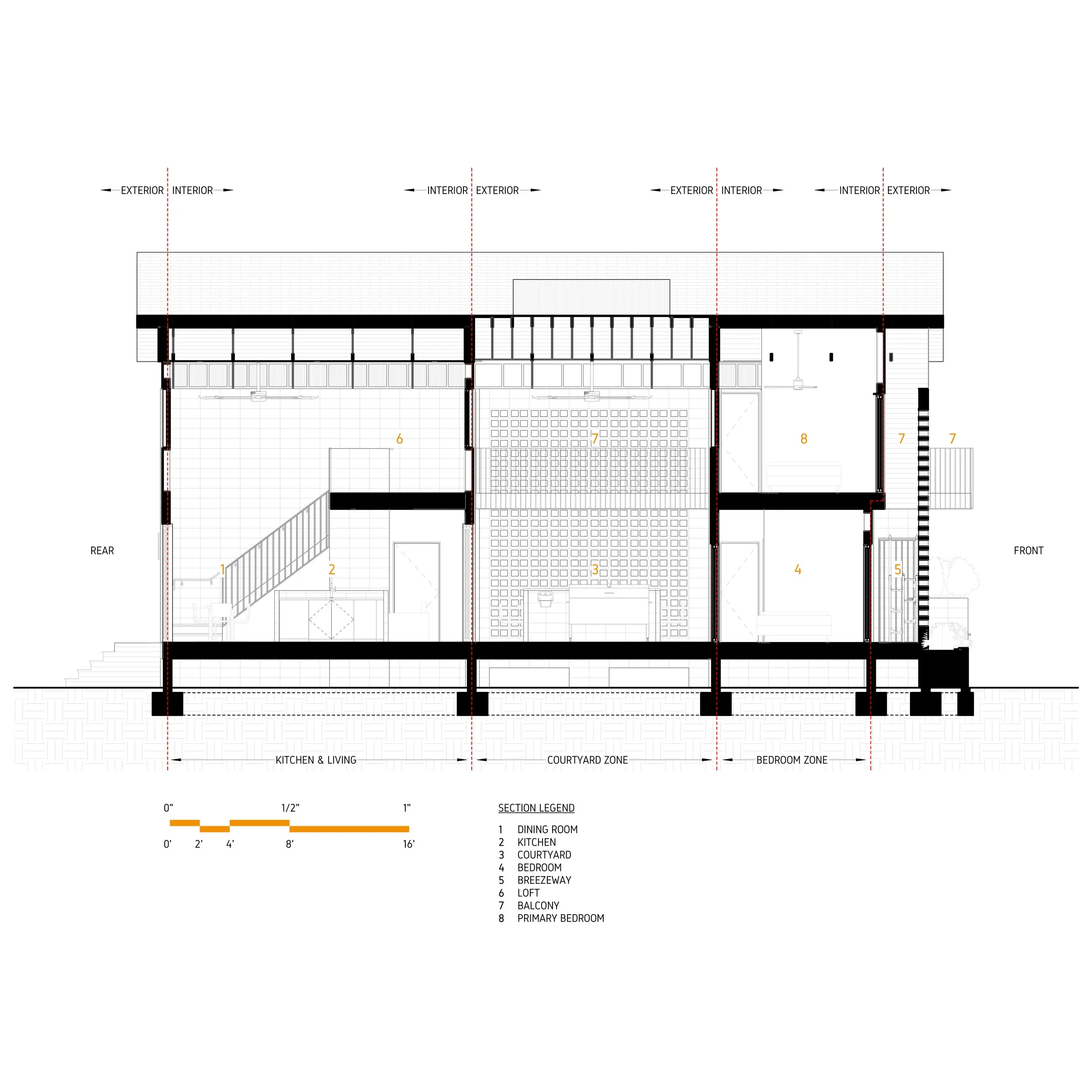
The layout of the house was conceived around the unique talents of the two clients in mind. One is a visual Artist who required a studio space for large-scale (vertically hung work) and the other is a Chef who required a space to host culinary events for large groups. Together they also need space for personal relaxation, pleasure and sleep (just like most people). The project has three (3) main zones for this purpose:
1) The front of the home is two (or one) studio/bedrooms spaces. The second-floor bedroom has a large hatch that exposes space vertically (between) studio/bedrooms, so the artist can hang 15’-18’ long pieces of work and move quickly between the spaces (via a compact alternating tread stair on the front deck) to work from top to bottom of the piece more easily. When the hatch is closed each space can easily function as bedroom space with nearby bathrooms.
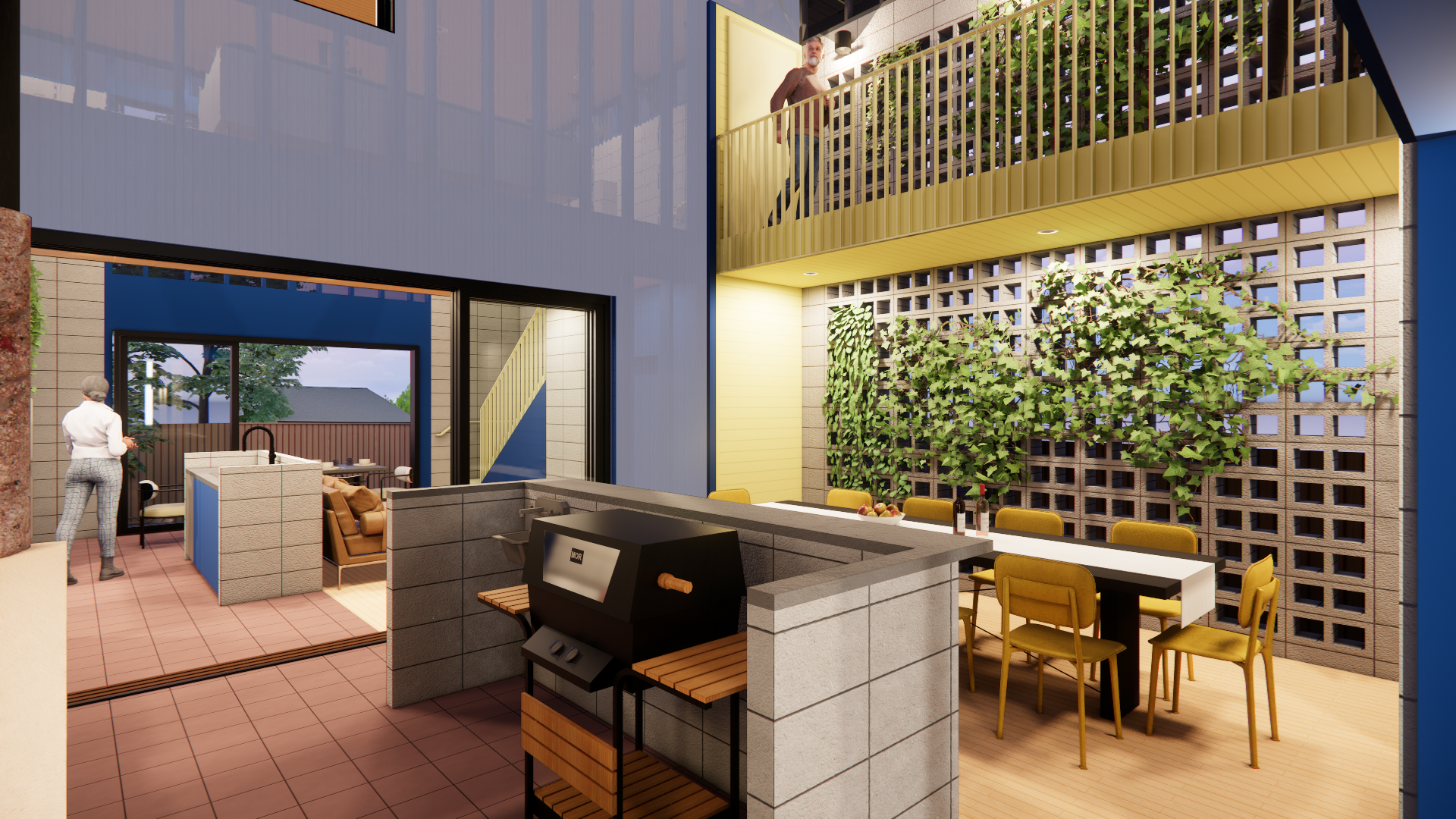
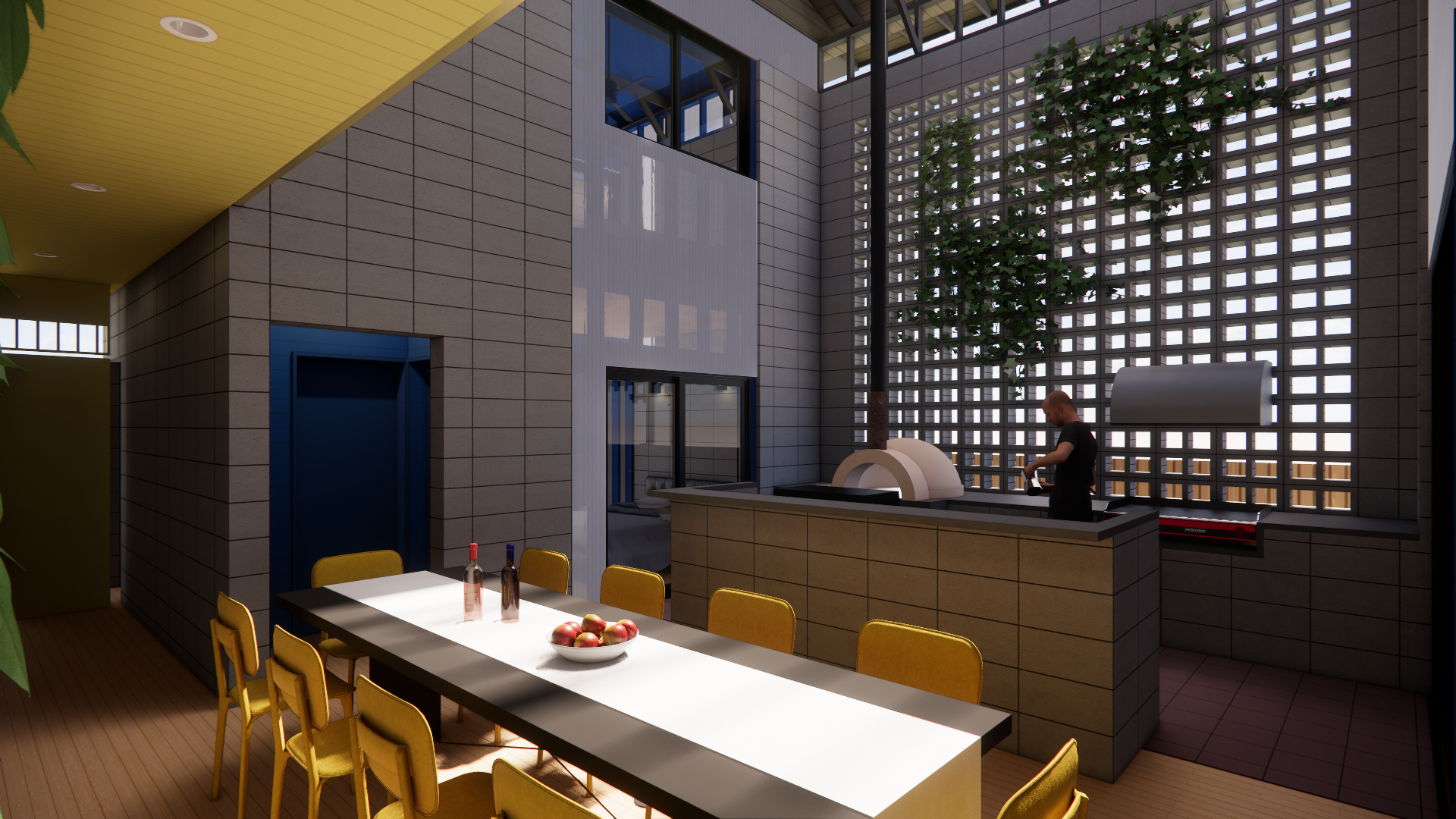
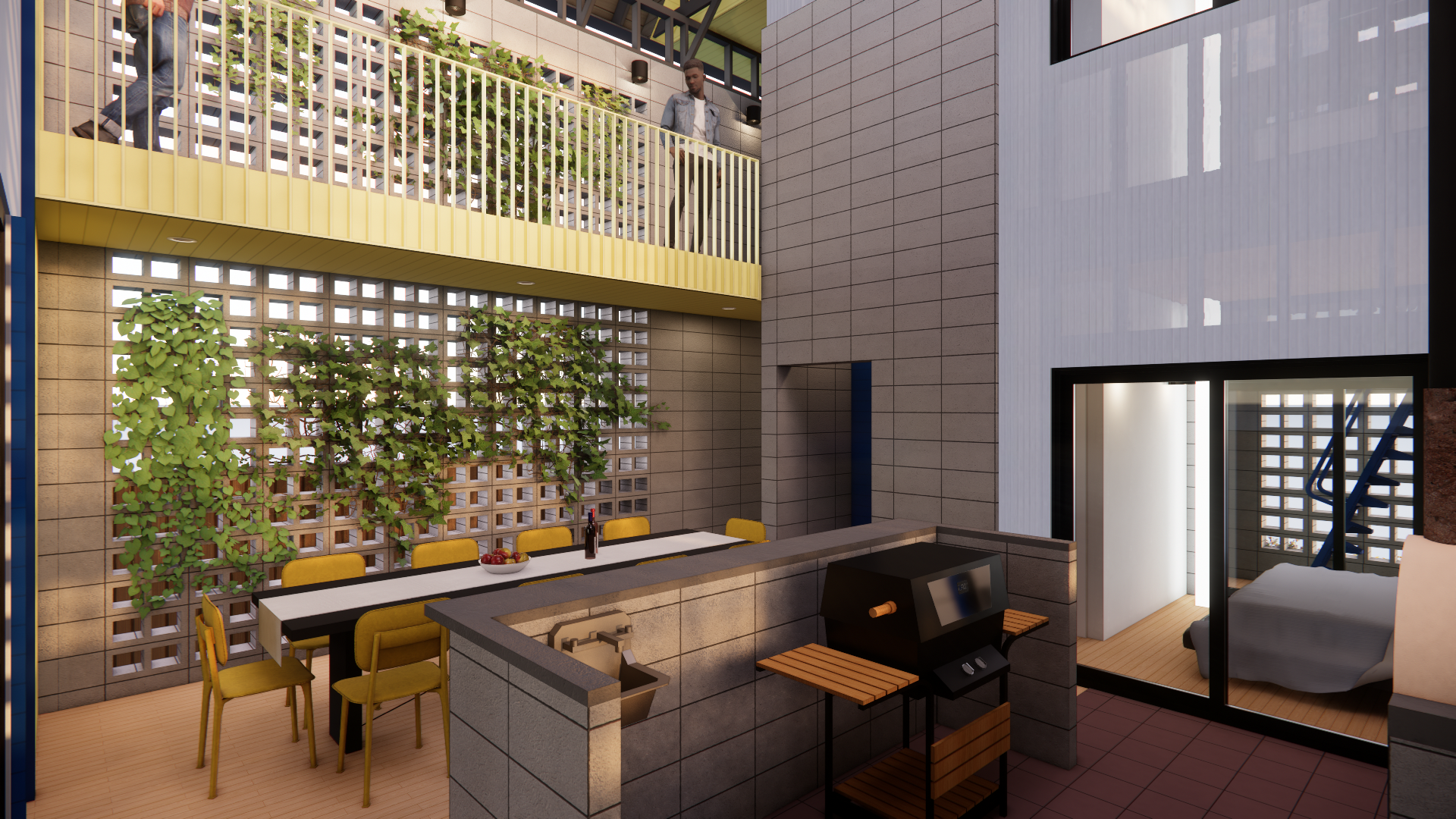
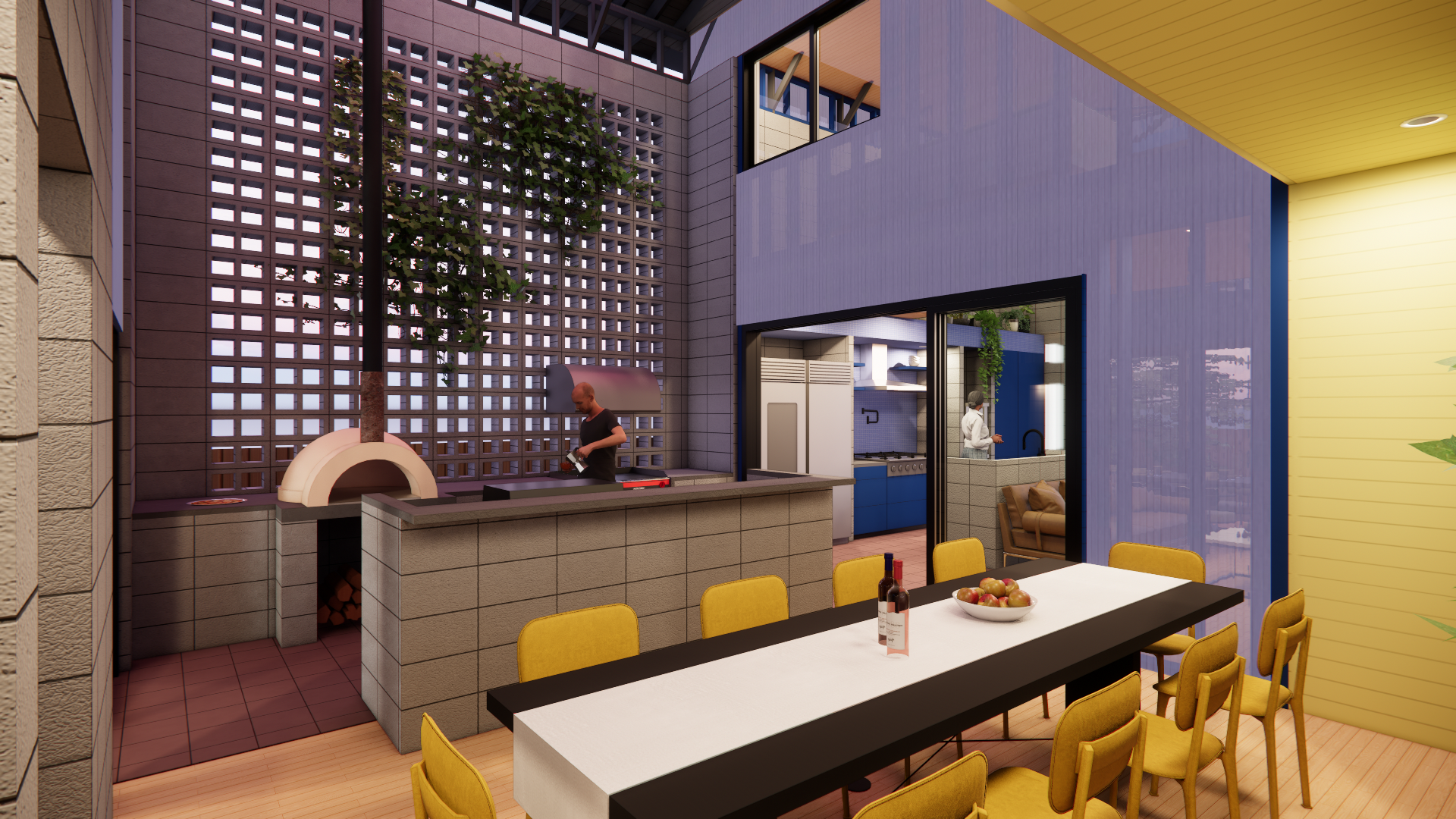
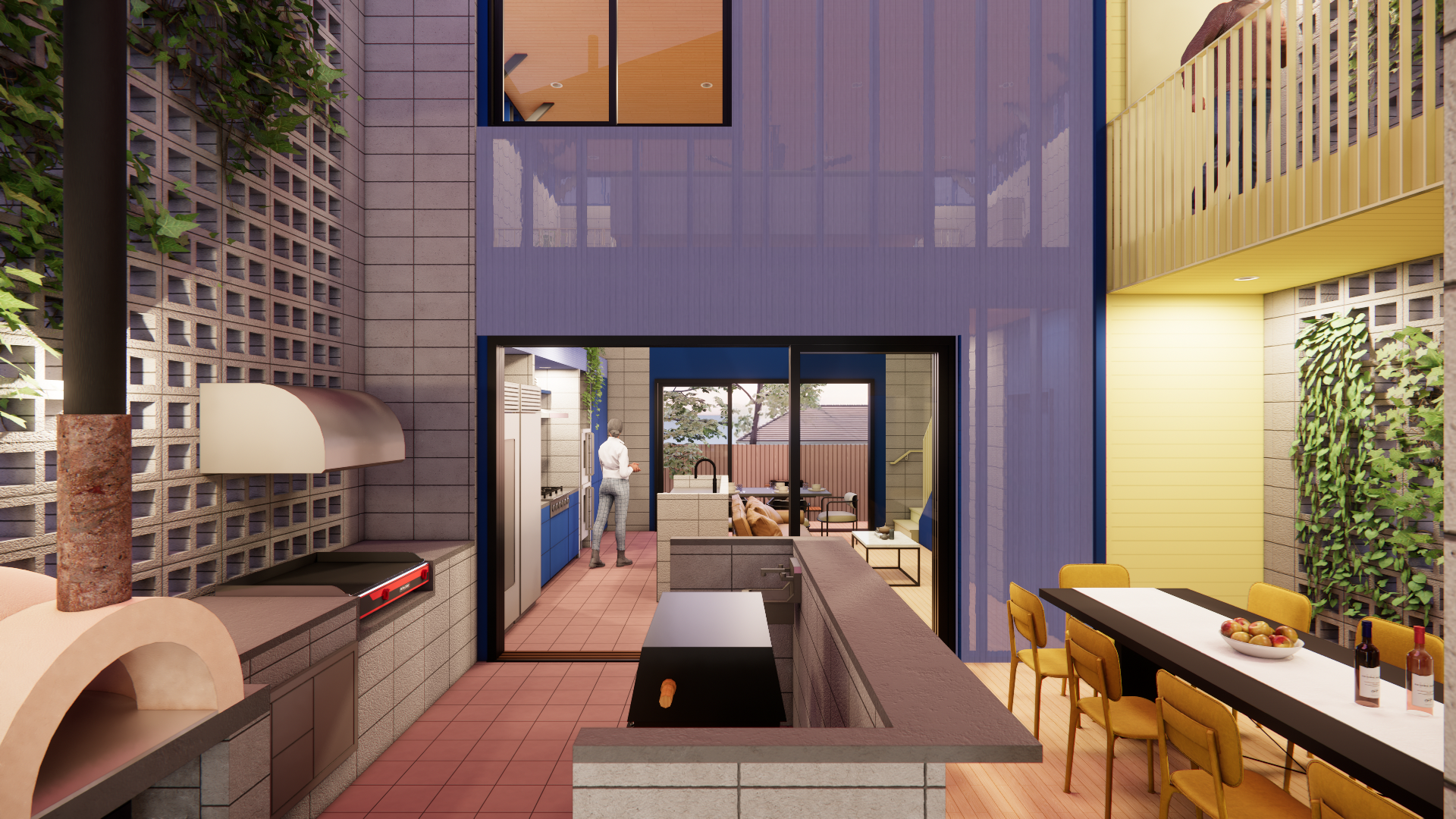
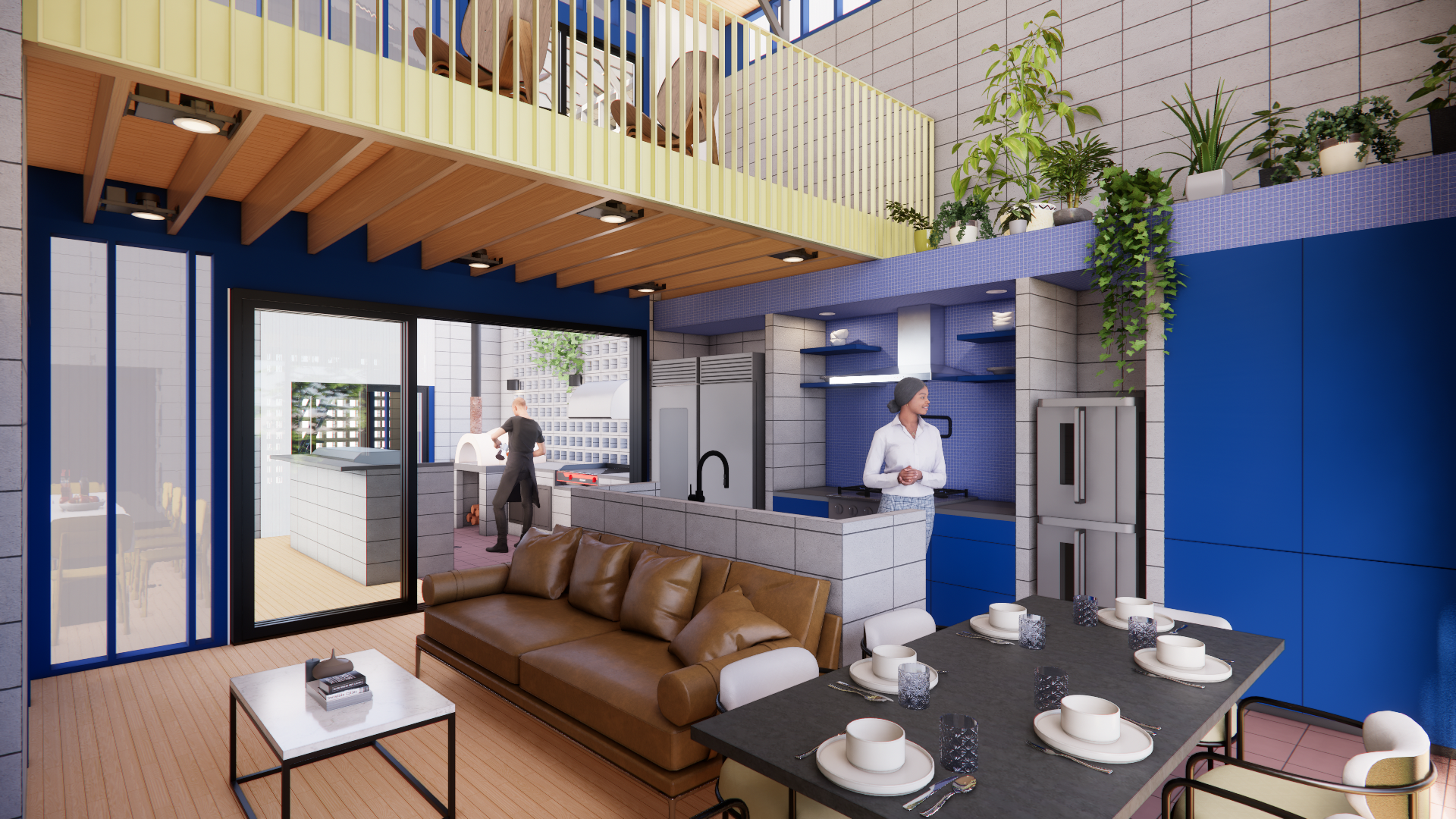
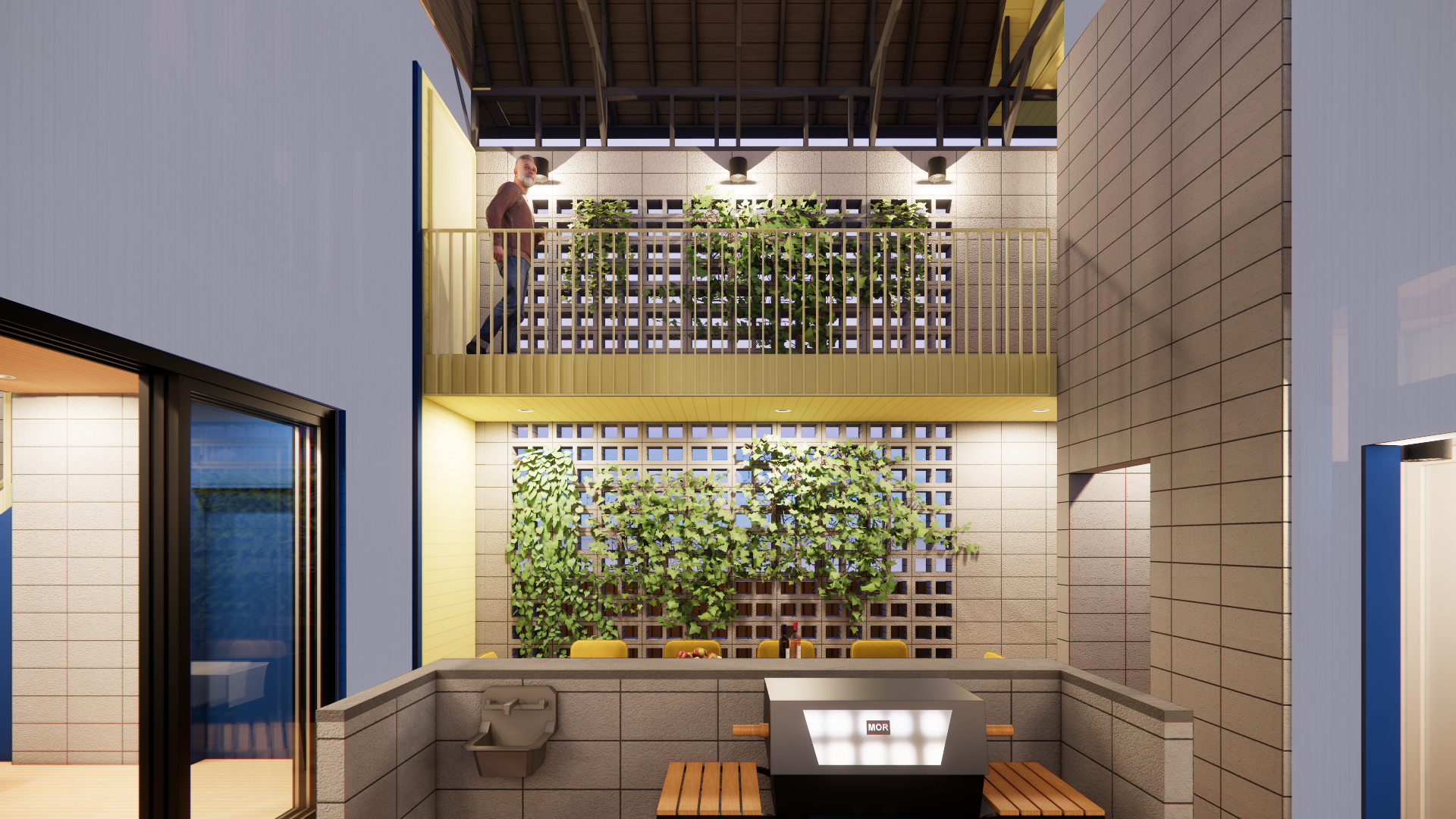
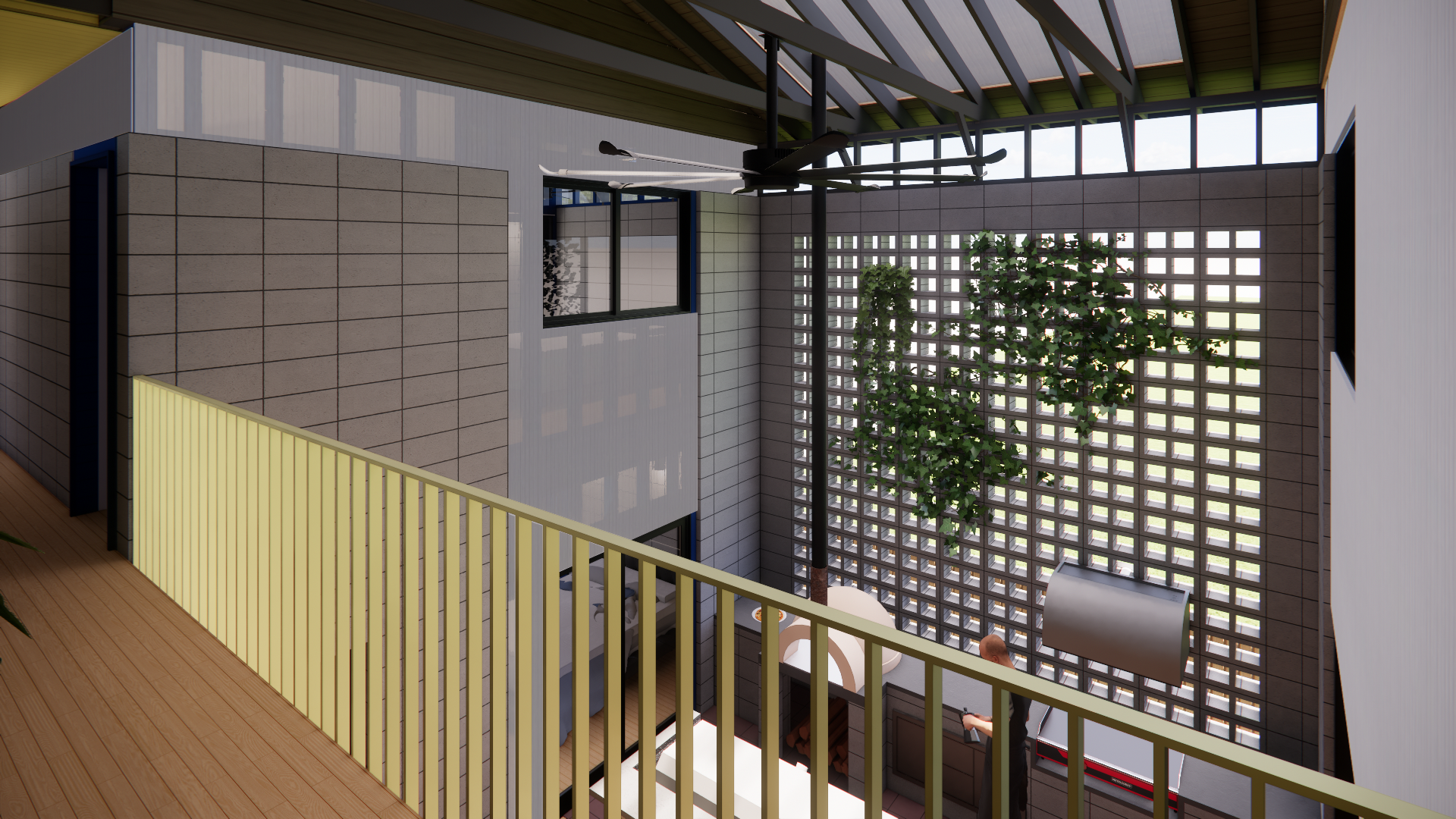
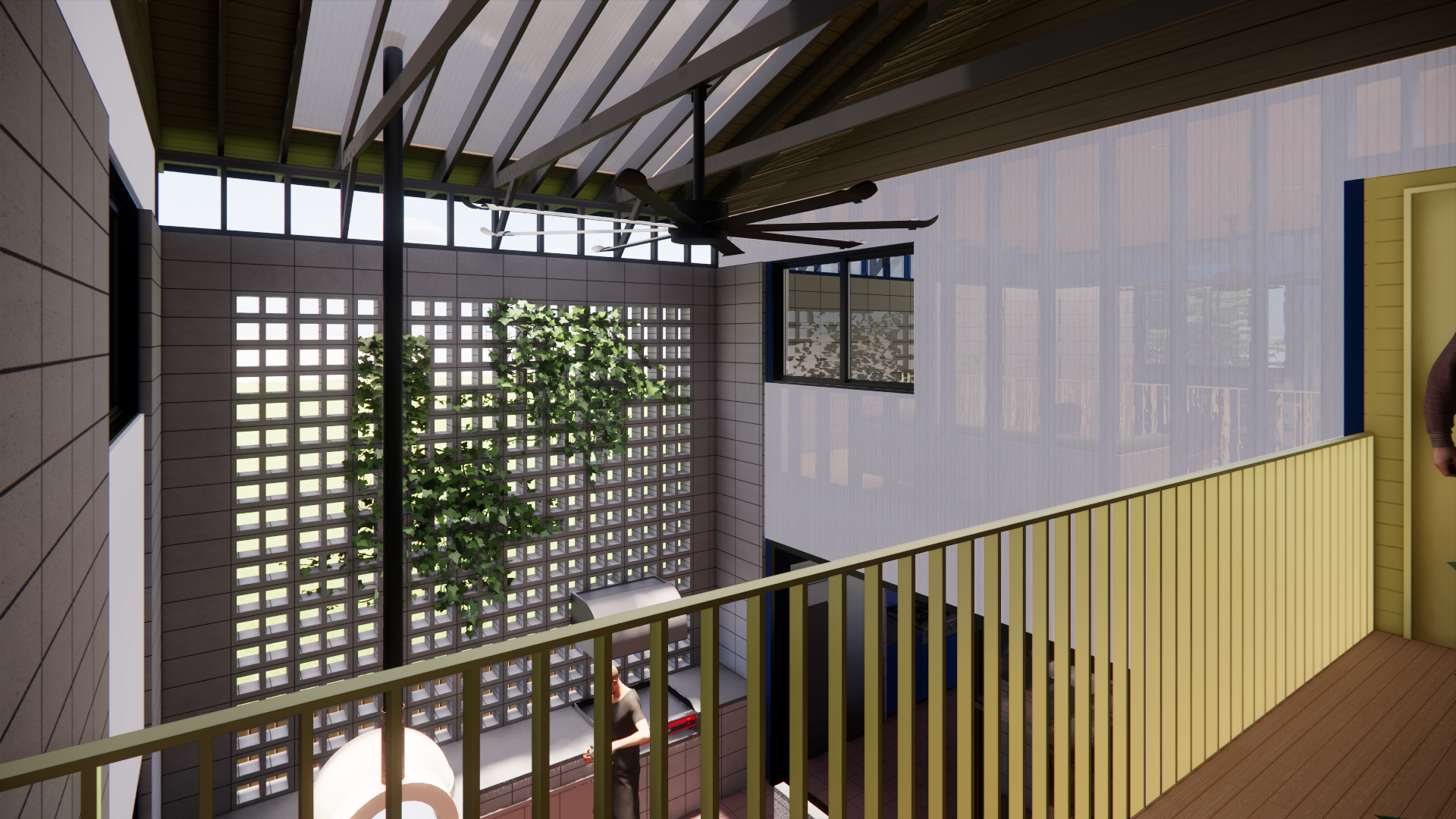
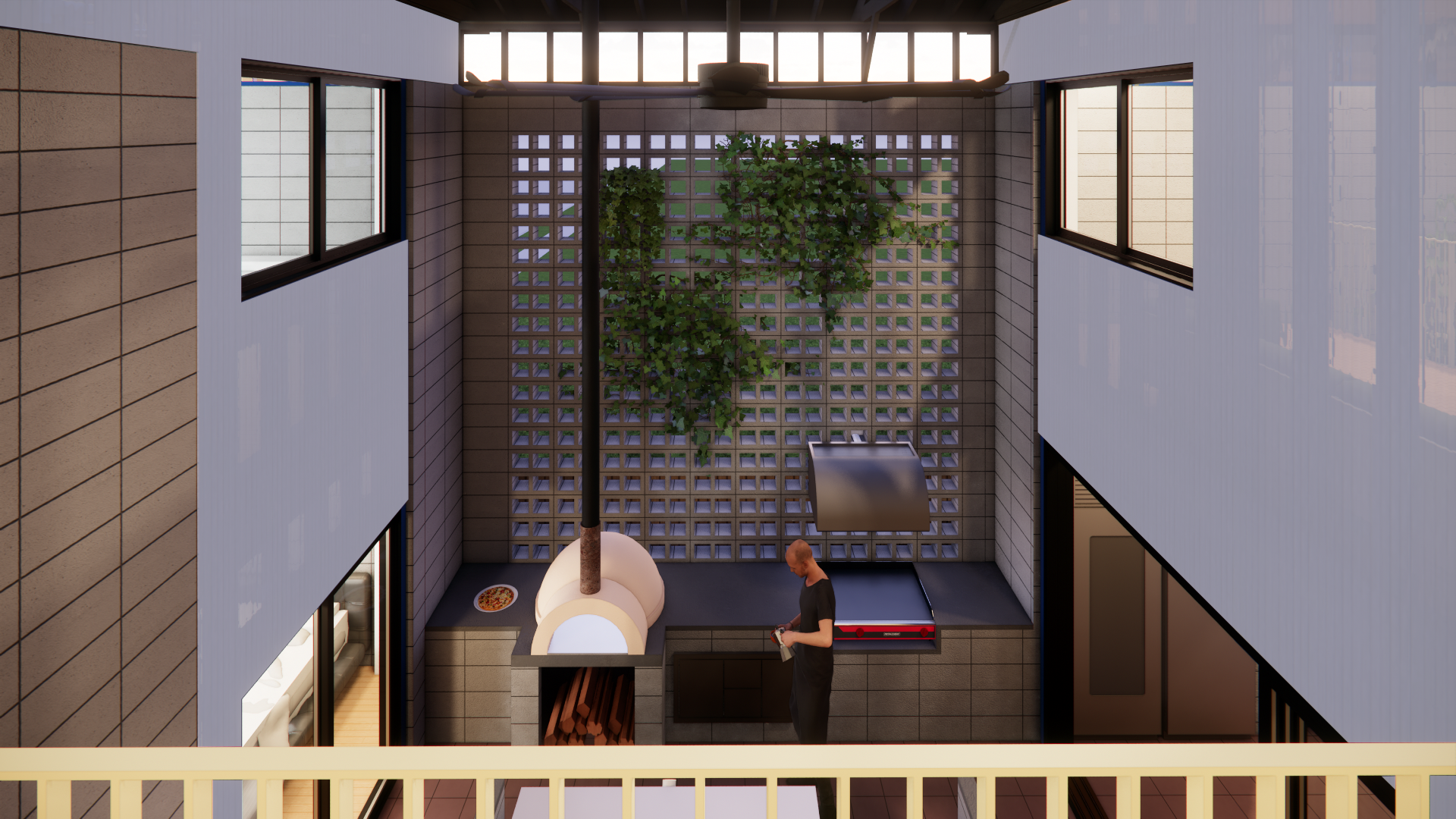
2) The middle zone is an exterior courtyard space for hosting culinary events or meals. This space is covered by a roof with a polycarbonate skylight for rain protection, but because it is exterior the CMU block on either side is not required to be insulated and is turned 90 degrees to form a tall screen wall allowing for cross circulation and ventilation throughout the space. The walls provide security and a degree of privacy without compromising exterior sensory benefits.
3) The rear zone is the living space with a personal kitchen (adjacent to the exterior courtyard kitchen so it can be used in tandem), dining space and living area. A stair is also provided here with a study loft connecting to a linear balcony overlooking the courtyard. The interior balcony overlooking the courtyard is a concept borrowed from the early Creole home and courtyards throughout the old part of the city. It is where the uses mix visibly.
*Projects labeled “affordable” often let that label dictate every decision, usually resulting in buildings that feel affordable in all the wrong ways. Our aim was different: to focus costs where they matter—structure, envelope, and long-term durability—while still addressing privacy, intimacy, sustainability, and ventilation. Essentially, we wanted affordability without the part where the house spends the next 30 years reminding you it was built on a budget.